
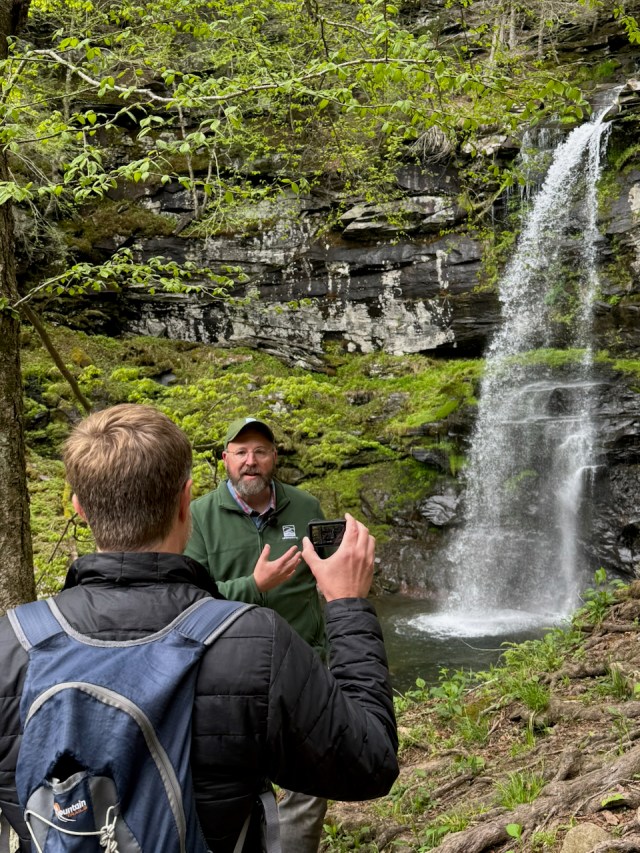
I recently joined TDC to explore one of the Catskills’ most important stories: the watershed that supplies drinking water to millions of New Yorkers. In the video, we visit the Ashokan Reservoir, the Catskills Visitor Center, and Platte Clove Preserve to consider the connections among clean water, healthy forests, protected public lands, local communities, and responsible recreation.
As Executive Director of the Catskill Center, I see watershed protection as both a conservation responsibility and a community commitment. It requires sound policy, sustained public investment, land stewardship, visitor education, and meaningful partnership among residents, local governments, nonprofits, and state agencies. Through the Catskill Center’s work, we advocate for Forest Preserve stewardship, climate resilience, public access, and the long-term well-being of Catskills communities.
The Catskills are more than a water source. They are a living landscape of towns, farms, forests, businesses, and people whose future is deeply connected to the health of the region’s land and water.

I was recently on Kaatscast talking about one of the most important and complicated places in the Catskills: Kaaterskill Clove. The episode, Extra Edition: Kaaterskill Clove at a Crossroads, looks at the new Visitor Use Management report for the Kaaterskill Falls corridor and what it could mean for the future of public access, visitor safety, and the health of […]

I’m encouraged by the New York State Department of Environmental Conservation’s release of the Kaaterskill Clove Project Area Recommendations Report and Monitoring Plan, which is an important step toward a more comprehensive, data-driven approach to managing one of the Catskill Park’s most heavily visited corridors. The Catskill Center has been calling for this kind of Visitor […]

I’m thrilled to share that I’ve received my New York State Department of Environmental Conservation (NYSDEC) Licensed Guide certification for hiking and camping. This credential from NYSDEC’s Licensed Guide Program lets me professionally direct, instruct, and assist clients on outdoor adventures, prioritizing safety and environmental care across New York’s wild spaces. You can now spot […]

Hike Ashokan High Point in the Catskills—9-mile loop or 7-mile out-and-back with forest trails, history, and Hudson Valley views.

The Devil’s Hopyard in Stark, New Hampshire, offers a 2.4-mile hike through a rugged gorge, featuring cliffs and mossy boulders. The trail is well-maintained but challenging in parts, especially within the gorge. It’s part of the New Hampshire Terrifying 25 Challenge, ideal for those seeking a unique outdoor adventure.

The Beehive Trail in Acadia National Park offers a thrilling 1.5-mile loop hike with steep ascents and stunning views, ideal for experienced hikers. It features iron rungs and exposed cliffs, leading to panoramic vistas of the Atlantic coastline. Safety is crucial, as the trek challenges those uncomfortable with heights.

Acadia National Park, established in 1916, showcases Maine’s majestic coastal landscapes. This hiking adventure involved a challenging 16-mile loop, featuring landmarks like Cadillac Mountain and The Beehive. The trek offered stunning views and a variety of terrains, emphasizing the park’s remarkable beauty and rich history, making it a memorable experience.

Schoodic Head, the highest point on the Schoodic Peninsula, offers hikers a 3-mile trek featuring stunning views of the Atlantic Ocean and surrounding areas. Starting at Blueberry Hill, the route includes the Anvil and Schoodic Head Trails, culminating in a scenic vista. It’s an easy to moderate hike with a 500-foot elevation gain.

Mount Pemigewasset is a prominent peak in the White Mountains of New Hampshire, located at the southern end of Franconia Notch State Park near the villages of Lincoln and Woodstock. At 2,557 feet, Mount Pemigewasset is known for its distinctive profile and stunning view, not its height. The most popular route to the summit is […]

